Case study
A six-week pilot across Peterborough Diocese Education Trust showed what becomes possible when schools share one practical approach to identifying needs, delivering interventions and evidencing progress.
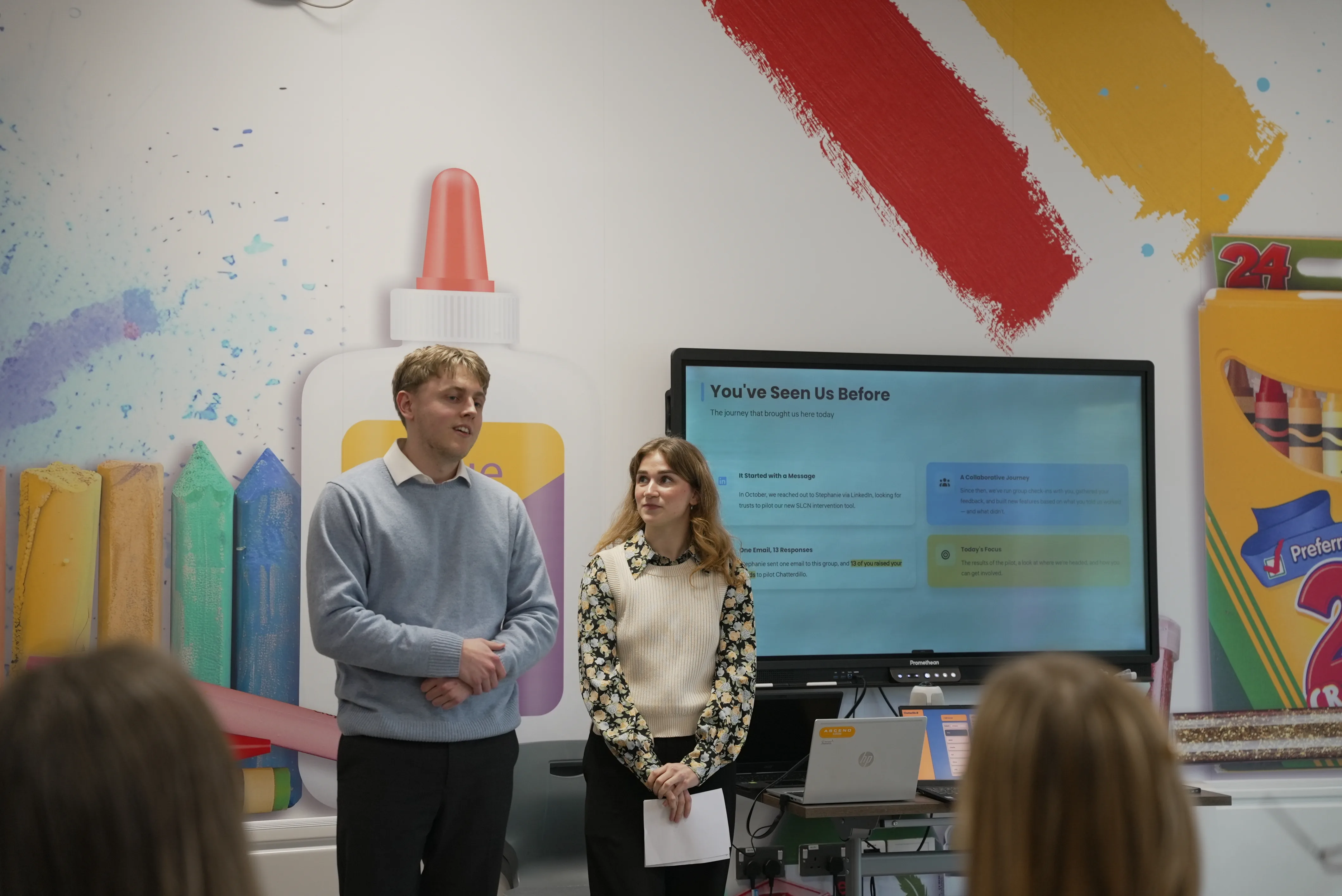
PDET wanted to widen access to speech, language and communication support across its schools without creating another complex system for staff to manage. The solution needed to work for non-specialists, fit around existing classroom routines and give leaders useful evidence of pupil participation and progress.
Thirteen schools joined a coordinated pilot shaped by regular group check-ins and direct feedback from SENCOs. Staff used Chatterdillo's screener to identify suitable activities, delivered short intervention sessions and recorded activity automatically. Schools were able to get started without a training day or specialist delivery team.
In six weeks, participating schools screened 58 children and completed 676 exercise sessions. The level of participation demonstrated that a shared model could work across a diverse group of schools, rather than being limited to a single enthusiastic setting.
Every pupil showed consistent engagement. Children described how the activities made them feel and how they supported their learning, while staff saw improvements in confidence and willingness to communicate. 89 perecent of staff felt Chatterdillo had a positive impact on learning outcomes and progress.
The pilot also addressed a pressure every school leader recognises: staff time. Seventy-eight per cent of staff reported saving up to two hours a week on resource preparation. For a five-person team, the report estimates that this could return around 100 hours to the school each year.
“I liked the colourful semantics because it helped me make a sentence.”
“Children who were struggling to read and say sentences are improving.”
A common screening and intervention pathway helps schools show how pupils with SLCN are identified, supported and included in learning across the trust.
Automated recommendations, session records and progress dashboards give leaders a clearer view of provision while reducing preparation and reporting demands on staff.
The pilot captured strong pupil voice and sustained participation, including children asking to repeat activities rather than needing incentives to take part.
PDET's pilot suggests that trusts can create more consistent SLCN provision without imposing a heavy implementation burden on schools. Shared tools, comparable evidence and lower preparation time give trust leaders a practical route from isolated interventions to a coordinated strategy.